
Research papers localized into Russian
Browse AI-localized academic documents available in Russian.
1589 documents
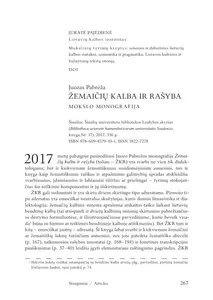
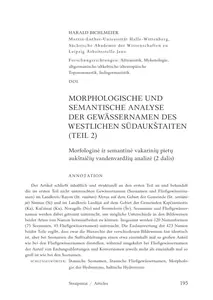
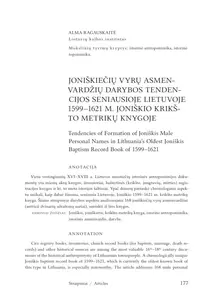
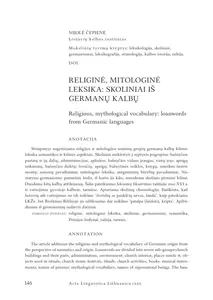
Аста Лескаускайте (составитель). „Тексты окрестностей Лейпалингиса“
DOI: 10.35321/all81-14
Лайма Каледене (составитель). „Валерий Чекмонас: языковые контакты и социолингвистика“
DOI: 10.35321/all81-13
Фолькер Кольхайм. „Имя в литературе“
DOI: 10.35321/all81-12
ЯЗЫК В ПОЭЗИИ: ФИЛОЛОГИЯ VS. БИОФИЛИЯ
DOI: 10.35321/all81-11
ДАУКАНТАСОВСКОЕ ДЫХАНИЕ ГРАНАУСКАСА
The article considers the impact of Lithuanian national historiography initiator and literary reformer Simonas Daukantas (1793–1864) on the creative writings of Romualdas Granauskas (1939–2014); it analyzes the short story of the writer with the focus on his Jaučio aukojimas…
DOI: 10.35321/all81-10
ИДЕОЛОГИЧЕСКИЕ КОНТЕКСТЫ НАУЧНОЙ ДЕЯТЕЛЬНОСТИ АНТАНАСА И ЙОНАСА ЮШКОВ В КАЗАНИ
The article attempts to answer the question why Kazan was the place where the works (Lithuanian folklore) compiled by the Juška brothers could be published in the Latin script in the period 1878–1882. The research focuses on the sociocultural conditions and ideological contexts…
DOI: 10.35321/all81-09
ОБРАЗЫ ЯЗЫКОВОЙ РОДИНЫ МОЛОДЫХ ВОСТОЧНЫХ АУКШТАЙТОВ — КУПИШКЕНАЙ И УТЕНЯЙ
The article presents a research study addressing the images of the linguistic homeland of the young Eastern Aukštaitians of Kupiškis and Utena. The material surveyed in the study consists of the data from the research conducted under the principles of perceptual dialectology…
DOI: 10.35321/all81-08
КАТЕГОРИЯ ПОВТОРА В ЛИНГВИСТИЧЕСКОМ ДИСКУРСЕ
The article deals with the phenomenon of categories, type description of linguistic categories in the structure of the language, as well as the history of their study. Due to the fact that modern science is characterized not only by the formation of new concepts, but also by…
DOI: 10.35321/all81-07
Мотивация суффиксальных гелонимов Мариямпольского уезда
The article addresses suffixal helonyms, which constitute a peculiar and interesting layer of the so called non-equivalent lexis. In order to reveal the motivated connection between their formal structure and meaning, these representatives of the hydronym class are analysed…
DOI: 10.35321/all81-05
ЛИТОВСКИЕ ИСТОРИЧЕСКИЕ ЛИЧНЫЕ ИМЕНА В МАРИЕНБУРГСКОЙ КНИГЕ ТРЕССЛЕРА ЗА 1399–1409 ГОДЫ
Der vorliegende Aufsatz befasst sich mit den Neufunden der litauischen historischen Anthroponymie und zwar mit den Personennamen, die dem Marienburger Tresslerbuch der Jahre 1399–1409 entnommen sind. In den finanziellen Dokumenten des Deutschen Ordens handelt es sich…
DOI: 10.35321/all81-04
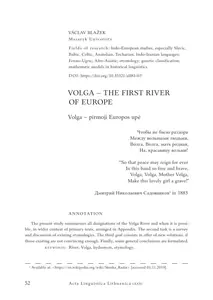
ВОЛГА — ПЕРВАЯ РЕКА ЕВРОПЫ
The present study summarizes all designations of the Volga River and when it is possible, in wider context of primary texts, arranged in Appendix. The second task is a survey and discussion of existing etymologies. The third goal consists in offer of new solutions, if those…
DOI: 10.35321/all81-03
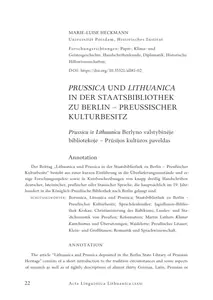
ПРУССИКА И ЛИТУАНИКА В БЕРЛИНСКОЙ ГОСУДАРСТВЕННОЙ БИБЛИОТЕКЕ — ПРУССКОЕ КУЛЬТУРНОЕ НАСЛЕДИЕ
Der Beitrag „Lithuanica und Prussica in der Staatsbibliothek zu Berlin – Preußischer Kulturbesitz“ besteht aus einer kurzen Einführung in die Überlieferungsumstände und einige Forschungsaspekte sowie in Kurzbeschreibungen von knapp dreißig Handschriften deutscher, lateinischer…
DOI: 10.35321/all81-02
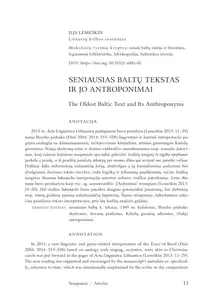
ДРЕВНЕЙШИЙ БАЛТИЙСКИЙ ТЕКСТ И ЕГО АНТРОПОНИМЫ
In 2013, a new linguistic and genre-related interpretation of the Trace of Basel (Dini 2004; 2014: 553–558) based on analogy with singing, recitative, texts akin to Christmas carols was put forward in the pages of Acta Linguistica Lithuanica (Lemeškin 2013: 11–29). The new…
DOI: 10.35321/all81-01
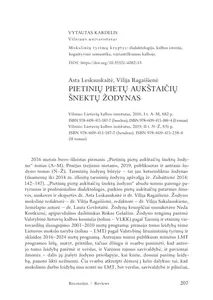
Аста Лескаускайте, Вилья Рагайшене. Словарь говоров южных южных аукштайтов
DOI: 10.35321/all82-13
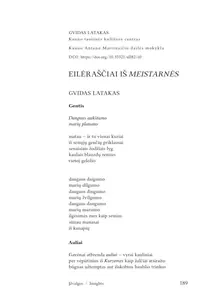
СТИХОТВОРЕНИЯ ИЗ MEISTARNĖS
DOI: 10.35321/all82-10
Каталанский язык «среднего размера» (возможные параллели с литовским языком)
DOI: 10.35321/all82-09
Вопрос об авторстве рукописного «Словаря литовского языка»: новые факты, выявленные при проведении судебной почерковедческой экспертизы
The archival document Dictionary of the Lithuanian Language (shelfmark IV A 11) is kept at the Department of Manuscripts and Early Printed Books of the Czech National Museum Library. This handwritten lexicographic relic is dated to the first half of the 19th century and contains…
DOI: 10.35321/all82-08
Личные имена в латвийских семьях из Бутинге и Швянтойи в XX–XXI веках
The article covers the most popular Latvian personal names in the borderline area of Lithuania in the early 20th century. The ancient tradition of giving names in Kurzeme is explained, which is also noticeable in the Būtingė and Šventoji native. A study has been performed in the…
DOI: 10.35321/all82-07
Морфология литовских топонимов — различия и параллели между разными классами названий
The participation in the project “Vakarinių pietų aukštaičių vietovardžių integravimas į Lietuvos vietovardžių geoinformacinę duomenų bazę ir jų kilmės bei motyvacijos tyrimai” [The integration of Western South Aukštaitian toponyms into the Lituanian geoinformational database…
DOI: 10.35321/all82-06
ПОНЯТИЕ СЛОВА AUGALAS (НА ОСНОВЕ ОПРОСА СТУДЕНТОВ)
Lithuanian explanatory dictionaries (Dictionary of Modern Lithuanian, Dictionary of the Lithuanian Language) usually define the word augalas (plant) as a botanical term by mentioning its essential features: ‘organism’, which feeds on ‘inorganic nutrients’ and requires ‘the…
DOI: 10.35321/all82-05
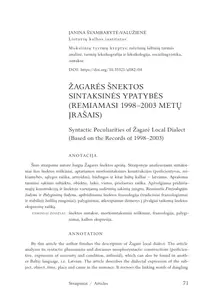
СИНТАКСИЧЕСКИЕ ОСОБЕННОСТИ ЖАГАРЕСКОГО ГОВОРА (НА ОСНОВЕ ЗАПИСЕЙ 1998–2003 ГОДОВ)
By this article the author finishes the description of Žagarė local dialect. The article analyzes its syntactic phenomena and discusses morphosyntactic constructions (perficientive, expression of necessity and condition, arthroid), which can also be found in another Baltic…
DOI: 10.35321/all82-04
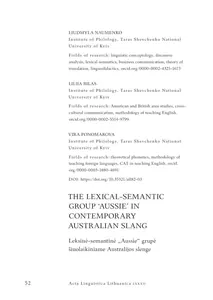
ЛЕКСИКО-СЕМАНТИЧЕСКАЯ ГРУППА «AUSSIE» В СОВРЕМЕННОМ АВСТРАЛИЙСКОМ СЛЕНГЕ
The aim of the article is to study the lexical-semantic group ‘Aussie’ in contemporary Australian slang (also strine). The objectives of the article are to determine the semantic structure of the lexeme Aussie and relations between its LSVs, to reconstruct the LSG ‘Aussie’ and…
DOI: 10.35321/all82-03