
Search results
3741+ documents found

The transformation of mobility in Europe: Technological change and social conditionings
The mobility of persons is changing due to technological innovation linked to autonomous and electric vehicles or to connectivity and data communication technologies. Furthermore, it is being conditioned by social behaviours. Qualitative research based on in-depth interviews…
DOI: 10.1016/j.tbs.2024.100907
Influence of binge drinking on the resting state functional connectivity of university Students: A follow-up study
Binge Drinking (BD) is characterized by consuming large amounts of alcohol on one occasion, posing risks to brain function. Nonetheless, it remains the most prevalent consumption pattern among students. Cross-sectional studies have explored the relationship between BD and…
DOI: 10.1016/j.abrep.2025.100585
Extraction and characterisation of gelatine from yellowfin tuna skin pretreated with a eutectic solvent
The accumulation and management of waste generated during the processing of seafood products is one of the major current challenges in the fishery industry. Among these residues, fish skin stands out for its high collagen content, from which high-quality gelatine can be…
DOI: 10.1016/j.foodhyd.2024.110652
A conceptual data modeling framework with four levels of abstraction for environmental information
Environmental data generated by observation infrastructures and models is widely heterogeneous in both structure and semantics. The design and implementation of an ad hoc data model for each new dataset is costly and creates barriers for data integration. On the other hand…
DOI: 10.1016/j.envsoft.2024.106248
Diagnostic Cut-Off Values Based on Lipid Layer Pattern for Dry Eye Disease Subtypes Assessment
Background: The aim of the present study was to establish a cut-off value of the Lipid Layer Pattern (LLP) between participants with different subtypes of Dry Eye Disease (DED) including Deficient Dry Eye (ADDE), Evaporative Dry Eye (EDE), and Mixed Dry Eye (MDE). Methods: 240…
Nomofobia en estudiantes universitarios gallegos: Análisis de la prevalencia y factores influyentes
Introducción: El presente estudio aborda la prevalencia y los factores de incidencia de la nomofobia entre estudiantes universitarios gallegos. Metodología: se realizó un estudio cuantitativo y transversal en el que se encuestó a 774 estudiantes de educación superior utilizando…
DOI: 10.31637/epsir-2025-987
Advancing waste valorization and end-of-life strategies in the bioeconomy through multi-criteria approaches and the safe and sustainable by design framework
Proper waste management is a key element in the transition to a sustainable bioeconomy. Population growth and the demand for food and services have led to an ever-increasing production of biotic waste whose disposal in landfills is no longer considered a sustainable option. For…
DOI: 10.1016/j.rser.2024.114907
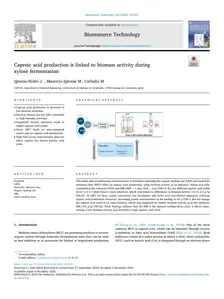
Caproic acid production is linked to biomass activity during xylose fermentation
This study aims at addressing inconsistencies in literature regarding the organic loading rate (OLR) and hydraulic retention time (HRT) effect on caproic acid production, using biomass activity as an indicator. Xylose was fully consumed in the reference CSTR and SBR (HRT =…
DOI: 10.1016/j.biortech.2024.131952